 Add to Chrome
 Add to Firefox
 Add to Edge
Uncertainty-DTW for Sequences and Visual Tokens
May 24, 2026
Aligning structured data is a fundamental problem in computer vision and machine learning, underlying tasks such as time series analysis, human action recognition, and visual representation learning. Existing alignment methods, including Dynamic Time Warping (DTW) and its differentiable variants, rely on deterministic similarity measures and are therefore sensitive to heterogeneous and noisy features. In this work, we introduce uncertainty-aware alignment, a probabilistic framework that models pairwise correspondences with heteroscedastic uncertainty and performs structured matching along alignment paths. Our formulation, uncertainty-DTW (uDTW), assigns each correspondence a Normal distribution and parametrizes each alignment path by a Maximum Likelihood Estimate objective consisting of (i) a precision-weighted matching term that suppresses unreliable features, and (ii) a log-variance regularization that prevents degenerate solutions. This yields a probabilistic alignment mechanism that is robust to noise and interpretable, as uncertainty directly reflects the reliability of matches. We further generalize this framework from temporal sequences to tokenized visual representations, enabling structured matching over sets of visual tokens. The learned uncertainty can be interpreted as a reverse-attention: semantically relevant regions exhibit low uncertainty and dominate the alignment, while ambiguous/noisy regions have high uncertainty. This provides a connection between alignment, attention, and uncertainty modeling. We evaluate the proposed framework across diverse domains. The results demonstrate consistent improvements over state-of-the-art methods and show that learned uncertainty correlates with semantic importance. These findings establish uncertainty-aware alignment as a general, robust, and interpretable framework for learning from structured data.

ICED: Concept-level Machine Unlearning via Interpretable Concept Decomposition
May 14, 2026Machine unlearning in Vision-Language Models (VLMs) is typically performed at the image or instance level, making it difficult to precisely remove target knowledge without affecting unrelated semantics. This issue is especially pronounced since a single image often contains multiple entangled concepts, including both target concepts to be forgotten and contextual information that should be preserved. In this paper, we propose an interpretable concept-level unlearning framework for VLMs, which constructs a compact task-specific concept vocabulary from the forgetting set using a multimodal large language model. In addition to modality alignment, visual representations are decomposed into sparse, nonnegative combinations of semantic concepts, providing an explicit interface for fine-grained knowledge manipulation. Based on this decomposition, our method formulates unlearning as concept-level optimization, where target concepts are selectively suppressed while intra-instance non-target semantics and global cross-modal knowledge are preserved. Extensive experiments across both in-domain and out-of-domain forgetting settings demonstrate that our method enables more comprehensive target forgetting, better preserves non-target knowledge within the same image, and maintains competitive model utility compared with existing VLM unlearning methods.
Hierarchically Robust Zero-shot Vision-language Models
Apr 20, 2026Vision-Language Models (VLMs) can perform zero-shot classification but are susceptible to adversarial attacks. While robust fine-tuning improves their robustness, existing approaches align fixed text embeddings with an image embedding, sacrificing natural performance and robustness. A robustness degradation also occurs when a model faces adversarial attacks targeting superclasses (parent classes, e.g., mammal) in addition to their base (leaf) classes (e.g., cat). Thus, to enhance adversarial robustness and leverage the inherent hierarchical properties of class space, we propose a novel adversarial fine-tuning framework based on hierarchical embeddings and several levels of adversarially robust alignment of image-text modalities. Additional mechanisms place visual embeddings at the desired depth of hierarchy, and we provide a theoretical connection between the depth of embedding in the hierarchy and the maximum viable margin size. Our model naturally realizes several margin sizes, boosting generalization of adversaries for robustification. As various trees with different parent labels can share the same leaf labels, we also consider aligning over multiple trees to boost semantic variety. Experiments across several datasets are performed.
DeCo-DETR: Decoupled Cognition DETR for efficient Open-Vocabulary Object Detection
Apr 03, 2026Open-vocabulary Object Detection (OVOD) enables models to recognize objects beyond predefined categories, but existing approaches remain limited in practical deployment. On the one hand, multimodal designs often incur substantial computational overhead due to their reliance on text encoders at inference time. On the other hand, tightly coupled training objectives introduce a trade-off between closed-set detection accuracy and open-world generalization. Thus, we propose Decoupled Cognition DETR (DeCo-DETR), a vision-centric framework that addresses these challenges through a unified decoupling paradigm. Instead of depending on online text encoding, DeCo-DETR constructs a hierarchical semantic prototype space from region-level descriptions generated by pre-trained LVLMs and aligned via CLIP, enabling efficient and reusable semantic representation. Building upon this representation, the framework further disentangles semantic reasoning from localization through a decoupled training strategy, which separates alignment and detection into parallel optimization streams. Extensive experiments on standard OVOD benchmarks demonstrate that DeCo-DETR achieves competitive zero-shot detection performance while significantly improving inference efficiency. These results highlight the effectiveness of decoupling semantic cognition from detection, offering a practical direction for scalable OVOD systems.
Focus on Background: Exploring SAM's Potential in Few-shot Medical Image Segmentation with Background-centric Prompting
Mar 22, 2026Conventional few-shot medical image segmentation (FSMIS) approaches face performance bottlenecks that hinder broader clinical applicability. Although the Segment Anything Model (SAM) exhibits strong category-agnostic segmentation capabilities, its direct application to medical images often leads to over-segmentation due to ambiguous anatomical boundaries. In this paper, we reformulate SAM-based FSMIS as a prompt localization task and propose FoB (Focus on Background), a background-centric prompt generator that provides accurate background prompts to constrain SAM's over-segmentation. Specifically, FoB bridges the gap between segmentation and prompt localization by category-agnostic generation of support background prompts and localizing them directly in the query image. To address the challenge of prompt localization for novel categories, FoB models rich contextual information to capture foreground-background spatial dependencies. Moreover, inspired by the inherent structural patterns of background prompts in medical images, FoB models this structure as a constraint to progressively refine background prompt predictions. Experiments on three diverse medical image datasets demonstrate that FoB outperforms other baselines by large margins, achieving state-of-the-art performance on FSMIS, and exhibiting strong cross-domain generalization. Our code is available at https://github.com/primebo1/FoB_SAM.
Subspace Kernel Learning on Tensor Sequences
Mar 20, 2026Learning from structured multi-way data, represented as higher-order tensors, requires capturing complex interactions across tensor modes while remaining computationally efficient. We introduce Uncertainty-driven Kernel Tensor Learning (UKTL), a novel kernel framework for $M$-mode tensors that compares mode-wise subspaces derived from tensor unfoldings, enabling expressive and robust similarity measure. To handle large-scale tensor data, we propose a scalable Nyström kernel linearization with dynamically learned pivot tensors obtained via soft $k$-means clustering. A key innovation of UKTL is its uncertainty-aware subspace weighting, which adaptively down-weights unreliable mode components based on estimated confidence, improving robustness and interpretability in comparisons between input and pivot tensors. Our framework is fully end-to-end trainable and naturally incorporates both multi-way and multi-mode interactions through structured kernel compositions. Extensive evaluations on action recognition benchmarks (NTU-60, NTU-120, Kinetics-Skeleton) show that UKTL achieves state-of-the-art performance, superior generalization, and meaningful mode-wise insights. This work establishes a principled, scalable, and interpretable kernel learning paradigm for structured multi-way and multi-modal tensor sequences.
Learning Time in Static Classifiers
Nov 15, 2025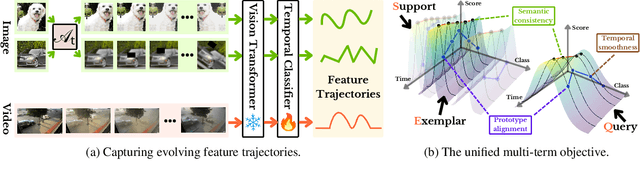
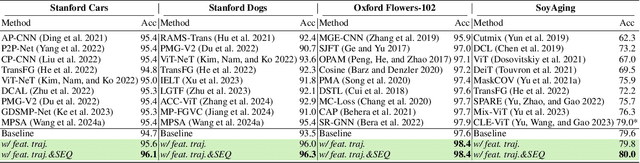
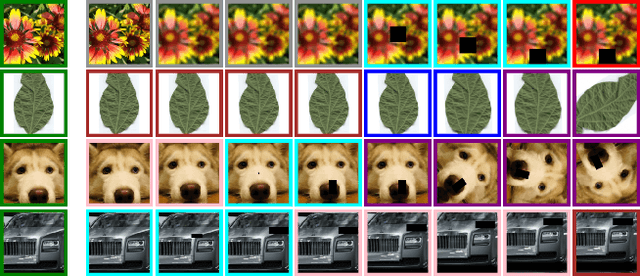

Real-world visual data rarely presents as isolated, static instances. Instead, it often evolves gradually over time through variations in pose, lighting, object state, or scene context. However, conventional classifiers are typically trained under the assumption of temporal independence, limiting their ability to capture such dynamics. We propose a simple yet effective framework that equips standard feedforward classifiers with temporal reasoning, all without modifying model architectures or introducing recurrent modules. At the heart of our approach is a novel Support-Exemplar-Query (SEQ) learning paradigm, which structures training data into temporally coherent trajectories. These trajectories enable the model to learn class-specific temporal prototypes and align prediction sequences via a differentiable soft-DTW loss. A multi-term objective further promotes semantic consistency and temporal smoothness. By interpreting input sequences as evolving feature trajectories, our method introduces a strong temporal inductive bias through loss design alone. This proves highly effective in both static and temporal tasks: it enhances performance on fine-grained and ultra-fine-grained image classification, and delivers precise, temporally consistent predictions in video anomaly detection. Despite its simplicity, our approach bridges static and temporal learning in a modular and data-efficient manner, requiring only a simple classifier on top of pre-extracted features.
Video Understanding by Design: How Datasets Shape Architectures and Insights
Sep 11, 2025Video understanding has advanced rapidly, fueled by increasingly complex datasets and powerful architectures. Yet existing surveys largely classify models by task or family, overlooking the structural pressures through which datasets guide architectural evolution. This survey is the first to adopt a dataset-driven perspective, showing how motion complexity, temporal span, hierarchical composition, and multimodal richness impose inductive biases that models should encode. We reinterpret milestones, from two-stream and 3D CNNs to sequential, transformer, and multimodal foundation models, as concrete responses to these dataset-driven pressures. Building on this synthesis, we offer practical guidance for aligning model design with dataset invariances while balancing scalability and task demands. By unifying datasets, inductive biases, and architectures into a coherent framework, this survey provides both a comprehensive retrospective and a prescriptive roadmap for advancing general-purpose video understanding.
Noise Consistency Regularization for Improved Subject-Driven Image Synthesis
Jun 06, 2025Fine-tuning Stable Diffusion enables subject-driven image synthesis by adapting the model to generate images containing specific subjects. However, existing fine-tuning methods suffer from two key issues: underfitting, where the model fails to reliably capture subject identity, and overfitting, where it memorizes the subject image and reduces background diversity. To address these challenges, we propose two auxiliary consistency losses for diffusion fine-tuning. First, a prior consistency regularization loss ensures that the predicted diffusion noise for prior (non-subject) images remains consistent with that of the pretrained model, improving fidelity. Second, a subject consistency regularization loss enhances the fine-tuned model's robustness to multiplicative noise modulated latent code, helping to preserve subject identity while improving diversity. Our experimental results demonstrate that incorporating these losses into fine-tuning not only preserves subject identity but also enhances image diversity, outperforming DreamBooth in terms of CLIP scores, background variation, and overall visual quality.
MATHGLANCE: Multimodal Large Language Models Do Not Know Where to Look in Mathematical Diagrams
Mar 26, 2025Diagrams serve as a fundamental form of visual language, representing complex concepts and their inter-relationships through structured symbols, shapes, and spatial arrangements. Unlike natural images, their inherently symbolic and abstract nature poses significant challenges for Multimodal Large Language Models (MLLMs). However, current benchmarks conflate perceptual and reasoning tasks, making it difficult to assess whether MLLMs genuinely understand mathematical diagrams beyond superficial pattern recognition. To address this gap, we introduce MATHGLANCE, a benchmark specifically designed to isolate and evaluate mathematical perception in MLLMs. MATHGLANCE comprises 1.2K images and 1.6K carefully curated questions spanning four perception tasks: shape classification, object counting, relationship identification, and object grounding, covering diverse domains including plane geometry, solid geometry, and graphical representations. Our evaluation of MLLMs reveals that their ability to understand diagrams is notably limited, particularly in fine-grained grounding tasks. In response, we construct GeoPeP, a perception-oriented dataset of 200K structured geometry image-text pairs explicitly annotated with geometric primitives and precise spatial relationships. Training MLLM on GeoPeP leads to significant gains in perceptual accuracy, which in turn substantially improves mathematical reasoning. Our benchmark and dataset establish critical standards for evaluating and advancing multimodal mathematical understanding, providing valuable resources and insights to foster future MLLM research.